Consciousness After Death: The First Answer Was Yes
Someone asks whether consciousness continues after death.
A certain kind of modern thinker answers immediately:
“No. Nothing exists after death.”
Then the explanation begins. The body dies. The brain stops. Consciousness disappears. The person becomes nothing.
I do not find this answer profound, courageous, or intellectually complete.
Nothing is nothing.
There is no conscious being inside nothing who can describe it. Nothing has no observer, no memory, no testimony, no knowledge, and no position from which to announce its own existence.
I am interested in what exists.
I am interested in life, consciousness, Spirit, identity, and the strange force within existence that keeps producing new forms of being.
The question of consciousness after death has two possible ultimate answers.
Conscious existence continues in some form, or it does not.
One or zero.
Yes or no.
But before we declare the final answer, we should recognize the first binary outcome that made every later question possible.
The first outcome was one.
Something exists.
From that original one, the entire tree of existence grew: matter, life, consciousness, personality, imagination, suffering, love, knowledge, Spirit, and the human need to understand what happens when the body can no longer carry us.
SoulCredo therefore does not begin the question of consciousness after death with zero. It begins with the same inner mystery explored in SoulCredo’s answer to the question of happiness: a living Spirit exists within us, demands development, and refuses to be satisfied by shallow explanations of human life.
The first observable truth is:
Yes. Existence is.
The serious question is not whether we can repeat that yes blindly.
The serious question is:
Yes, but what continues—and what becomes?
The First Binary Outcome Was Existence
Reality may contain endless complexity, but its first division is simple.
Something, or nothing.
Presence, or absence.
One, or zero.
Whatever preceded the world we know, existence did not remain at zero. There is a universe. There is life. There are conscious beings capable of recognizing that they exist.
Existence won the first binary contest.
This does not mean that every possible thing exists. It does not mean that every spiritual claim is true. It does not mean that every account of heaven, reincarnation, ghosts, or communication with the dead should be accepted without judgment.
It means that nonexistence should not be treated as the natural winner merely because it sounds intellectually severe.
The actual reality before us is existence.
A vast tree has grown from that original affirmation.
The tree produced stars, worlds, living organisms, instincts, minds, civilizations, languages, religions, philosophies, arts, dreams, fears, and questions about the fate of consciousness.
Many possibilities fall from this tree.
Ideas fail. Organisms die. Civilizations collapse. Beliefs are disproved. Individual forms disappear. These are zeros: rejected possibilities, ended forms, and branches that no longer continue in their previous condition.
But the tree itself grows through ones.
A new form exists.
A new relationship is discovered.
A new consciousness awakens.
A new meaning is created.
A new possibility becomes real.
A new question opens another branch.
Knowledge does not grow because humanity repeats “no” until silence takes over. It grows because human beings continue searching for qualified affirmations.
Yes, this exists.
Yes, this is possible.
Yes, this relationship can be understood.
Yes, but the first explanation was incomplete.
Yes, but another layer remains.
That final word matters.
Blind yes becomes superstition.
Blind no becomes intellectual death.
Yes, but creates development.
Why “Nothing Exists After Death” Is Not Knowledge
A person may believe that consciousness ends with bodily death.
That is a legitimate belief.
A person may interpret consciousness as a temporary function of the physical organism. Under that interpretation, once the organism can no longer function, the conscious person ceases to exist.
But belief in total extinction remains a belief about the ultimate nature of existence.
It is not a report from nothingness.
No one experiences nonexistence and returns with knowledge of it. No observer stands outside every possible form of being and confirms that consciousness has been permanently erased.
The living may observe a dead body.
They may observe that the body no longer moves, speaks, responds, remembers, recognizes, or expresses personality.
They may know that the familiar human vessel has stopped functioning.
That is knowledge about the body.
The additional claim that no Spirit, no consciousness, no inner life, no personal essence, and no form of existence continues beyond that body is a metaphysical conclusion.
It may be correct.
But it does not become established merely because someone delivers it confidently.
People often accuse religious believers of filling the unknown with comforting stories. That accusation can sometimes be justified. Fear of death has inspired fantasies, doctrines, rituals, and promises.
Yet disbelief can serve the same psychological function.
The declaration “nothing happens” removes mystery. It closes the door. It places reality inside a system the speaker believes can be intellectually controlled.
One person protects themselves with heaven.
Another protects themselves with nothing.
Neither comfort should be mistaken for knowledge.
SoulCredo is not interested in choosing the emotionally convenient answer.
It is interested in the nature of Spirit and the continuing process of becoming.
Consciousness Is Already a Mystery Before Death
People speak about consciousness after death as though consciousness before death had been completely explained.
It has not.
We know consciousness intimately because every thought, sensation, fear, memory, and belief appears within it.
At the same time, we cannot stand outside consciousness and observe it in the same manner that we observe an ordinary physical object.
Consciousness is the condition through which observation happens.
We can see a stone.
We can examine a body.
We can observe behaviour.
But the direct experience of being someone—the private presence behind the eyes—belongs to the conscious subject.
Every person lives inside this mystery.
You know that you exist.
You know that experiences are happening to you.
You know that there is a difference between your inner world and everything appearing outside it.
But what is this knowing presence?
Is it merely the surface activity of the body?
Is it the voice of personality?
Is it the Ego protecting its constructed identity?
Is it the SoulGuardian becoming aware of the soul?
Is it Spirit looking through the temporary vessel of an individual life?
These questions determine what we believe could survive death.
If consciousness is only a temporary output of biological machinery, bodily death ends the conscious person.
If consciousness belongs to Spirit and uses the body as a vessel, the death of the vessel may represent transformation rather than absolute extinction.
The question of survival after death therefore begins with the question of what we are while alive.
Philosophers discussing the possibility of an afterlife confront the same underlying problem: what would need to continue for a person to survive death?
SoulCredo begins its answer with Spirit.
The SoulCredo Premise: Spirit Exists Within Life
SoulCredo understands Spirit as the living force within the soul.
Spirit is not merely the social personality.
It is not a job title, reputation, political identity, family role, or collection of opinions through which a person presents themselves to the world.
It is not identical to Ego.
Ego forms around fear, protection, social survival, pain, desire, and the need to preserve a manageable identity. Ego can serve the person, but it can also dominate the soul and prevent the deeper life within from being heard.
Spirit is deeper.
Spirit is the Spark of living existence within the individual.
It carries the demand for growth, development, expression, value, connection, contribution, and fuller being.
SoulCredo calls this demand the Will To Become.
You feel it whenever life as it currently stands is insufficient.
You may have food, shelter, employment, relationships, and physical safety. Yet something within you still demands more life.
More meaning.
More capability.
More love.
More usefulness.
More recognition.
More understanding.
More fulfilment.
More becoming.
This inner demand is often misunderstood as greed, vanity, anxiety, ingratitude, or restless ambition. Those distortions may attach themselves to it, but they do not explain the root force.
The Will To Become is Spirit refusing stagnation.
It is the one within us seeking another one.
Another form of development.
Another realization.
Another expansion of life.
SoulCredo’s different theory of human unhappiness begins from this premise: human beings frequently suffer because the deeper life within them is not becoming what it demands to become.
Once Spirit is understood as a living force rather than a poetic label, death raises a difficult question:
Why should the destruction of one vessel automatically prove the destruction of the force that gave the vessel its inner demand to become?
SoulCredo does not accept that conclusion without further inquiry.
The Body Is a Vessel, but the Vessel Matters
Calling the body a vessel does not mean treating it as disposable.
The body is the living form through which Spirit participates in this world.
It allows Spirit to see, touch, move, work, build, create, love, suffer, communicate, reproduce, protect, remember, and contribute.
The body gives Spirit practical presence.
This is why care of the body is a spiritual responsibility within SoulCredo.
The SoulGuardian must maintain the vessel.
Health, vitality, strength, beauty, energy, rest, and physical capability are not shallow concerns when they support the fuller expression of life.
The same applies to the mind, personality, skills, resources, social role, and relationships. All form part of the worldly vessel through which Spirit becomes active and visible.
When the body dies, that form of participation ends.
The hands no longer build.
The voice no longer speaks.
The familiar face no longer responds.
The person can no longer act through the same physical presence.
This loss is real.
Spiritual belief should never be used to minimize grief or pretend that bodily death changes nothing.
Something enormous has happened.
A living human form has been removed from ordinary relationship with the world.
The question is whether the death of that form eliminates Spirit itself or changes the manner in which Spirit exists.
SoulCredo approaches death as the end of one mode of becoming, not as demonstrated proof that all being has returned to zero.
Death May End the Person We Recognize Without Ending Spirit
We need to distinguish several possible forms of continuation.
When people ask whether consciousness survives death, they often imagine the complete earthly personality continuing unchanged.
The same memories.
The same preferences.
The same voice.
The same attachments.
The same self-image.
The same Ego, now placed in another location.
That may be possible, but it should not be assumed.
A more serious spiritual inquiry asks what part of the person is capable of survival.
Could memory continue?
Could awareness continue without ordinary memory?
Could the essential pattern of the individual remain?
Could Spirit continue while the earthly personality dissolves?
Could the person awaken into a larger identity that includes but exceeds the temporary Ego?
Could personal consciousness become transformed so radically that the word “survival” no longer describes it adequately?
The philosophical problem of personal identity exists because mere continuation is not enough. Something may remain after death without remaining recognizably you.
Different accounts locate personal continuity in the soul, body, memory, consciousness, psychological structure, or some combination of these.
SoulCredo does not need to pretend that this problem is simple.
Spirit may be deeper than personality.
The SoulGuardian may be a developmental role tied to individual earthly consciousness.
Ego may weaken or dissolve.
The Spark may return to a greater spiritual source.
Some structure of personal identity may remain.
Other parts may fall away like dead branches from the tree.
This is where “yes, but” becomes necessary.
Yes, consciousness may continue.
But what kind of consciousness?
Yes, Spirit may survive.
But does personal identity survive with it?
Yes, something may remain.
But does that something remember, choose, love, recognize, and continue becoming?
These questions deepen belief. They do not destroy it.
Blind Yes Produces Spiritual Stagnation
Religions and spiritual traditions have offered many accounts of life after death.
Heaven.
Hell.
Resurrection.
Reincarnation.
Judgment.
Union with God.
Return to the source.
Ancestral existence.
Spiritual worlds.
Cycles of rebirth.
These traditions carry centuries of human confrontation with death. They should not be dismissed merely because modern secular culture often treats spiritual language as intellectual weakness.
The philosophical concept of immortality includes several different possibilities. Afterlife may mean some form of existence after death, while immortality more specifically implies indefinite continuation. The surviving element may be understood as soul, consciousness, personality, resurrected person, or another form of identity.
Yet inherited answers can also become another form of closure.
A person is told exactly what happens after death.
They accept it.
The question dies.
No further inquiry is required.
This produces a historical yes: a yes received from previous generations and repeated because repetition feels faithful.
SoulCredo respects spiritual inheritance, but it cannot live entirely inside inherited answers.
A living belief system must continue becoming.
“Yes” must be followed by “but.”
Yes, there may be heaven, but what is heaven?
Yes, the soul may survive, but what is the soul?
Yes, Spirit may return to God, but what becomes of the individual Spark?
Yes, judgment may occur, but what is being judged: obedience, moral action, spiritual development, the care of the vessel, or the degree to which Spirit was allowed to become?
Yes, reincarnation may occur, but what continues if ordinary memory does not?
Yes, the dead may live in another realm, but what relationship remains between their consciousness and ours?
Questions do not insult belief.
They prevent belief from becoming dead matter.
Blind No Produces Intellectual Stagnation
The same problem appears on the opposite side.
A person repeats:
“There is nothing.”
“What you call Spirit is imagination.”
“The soul is a primitive idea.”
“Consciousness ends.”
“Death is final.”
These claims are often presented as signs of sophistication. The speaker may believe that negation requires courage while spiritual openness reveals fear.
But automatic negation is intellectually easy.
No further model is needed.
No spiritual tradition must be studied.
No esoteric system must be examined.
No account of Spirit must be considered.
No difficult distinction between Ego, personality, consciousness, soul, and divine Spark must be developed.
Everything is placed into zero.
The conversation ends.
This is not development.
It is conceptual disposal.
A genuine no should emerge after investigation. It should eliminate a failed possibility because a stronger understanding has replaced it.
The no of inquiry prunes the tree.
The no of fashion cuts down the tree because the investigator has become impatient with branches.
SoulCredo rejects that impatience.
We do not need to accept every supernatural claim.
We do need to preserve the question long enough for knowledge to develop.
The Tree of Knowledge Needs Zeros
The tree of knowledge does not grow through affirmation alone.
Zeros matter.
False stories must be rejected.
Manipulative spiritual leaders must be exposed.
Fraudulent claims about communication with the dead should not be protected by the language of faith.
Comforting fantasies should not become mandatory doctrine merely because people fear death.
Contradictions must be confronted.
Weak interpretations must be discarded.
A belief system that cannot tolerate a no becomes a prison.
SoulCredo does not seek endless affirmation.
It seeks synthetic knowledge.
Synthetic knowledge gathers different forms of human understanding and forces them into serious relationship:
- spiritual experience
- philosophy
- theology
- esotericism
- symbolism
- myth
- depth psychology
- religious tradition
- personal confrontation
- observation of the human condition
- reason
Each may reveal part of the structure.
Each may also produce distortion.
The purpose of synthesis is not to accept everything. It is to build a stronger understanding from what survives examination.
Zeros fall away.
Ones remain.
New branches grow.
SoulCredo Is Spiritual, Not Scientistic
SoulCredo is not a scientific theory of consciousness after death.
It does not claim that Spirit, the Spark, SoulGuardian, Will To Become, or the survival of consciousness have been scientifically proven.
Nor should SoulCredo dress spiritual beliefs in scientific terminology merely to make them appear respectable.
SoulCredo belongs primarily to spirituality, philosophy, theology, esotericism, metaphysics, symbolic understanding, and depth psychology.
These modes of inquiry ask questions such as:
- What is the soul?
- What is Spirit?
- What is the relationship between individual consciousness and a greater spiritual reality?
- Does personality exhaust identity?
- What is the meaning of death?
- Can the inner life contain understanding that rational consciousness has not yet integrated?
- How have human beings represented death through dreams, symbols, myths, visions, and religious traditions?
These are serious human questions.
They cannot all be resolved by observing the external mechanics of the physical vessel.
Philosophical mind-body dualism represents one historical attempt to understand mind and physical reality as fundamentally distinct. SoulCredo does not need to adopt every form of philosophical dualism, but it shares the refusal to assume that the visible body necessarily exhausts the reality of consciousness.
The death of the body demonstrates that the vessel has ended.
It does not automatically demonstrate that Spirit has been erased.
The Psyche Refuses to Treat Death as a Simple Ending
Depth psychology is relevant because death is not only a future physical event.
It is also an image within the psyche.
Human beings dream about death, fear it, symbolize it, ritualize it, deny it, prepare for it, and build systems of meaning around it.
The deep psyche produces images of continuation, transformation, ancestors, gods, rebirth, judgment, darkness, passage, ascent, descent, and return.
A strict materialist may interpret these images entirely as psychological defences against death.
That explanation may contain part of the truth.
SoulCredo asks another question:
Why should we assume that symbolic experience is only defensive fabrication?
A symbol may protect.
It may also communicate.
It may connect conscious personality with a deeper layer of the soul.
A dream does not speak in literal arguments. It speaks through image, tension, transformation, repetition, and emotional force.
Spiritual traditions often speak the same language.
The river.
The gate.
The bridge.
The underworld.
The mountain.
The light.
The grave.
The resurrection.
The return home.
These symbols may carry psychological meaning, spiritual meaning, or both.
Synthetic knowledge does not force us to choose prematurely.
It investigates what each interpretation reveals and what it fails to explain.
Plato and the Ancient Question of the Soul
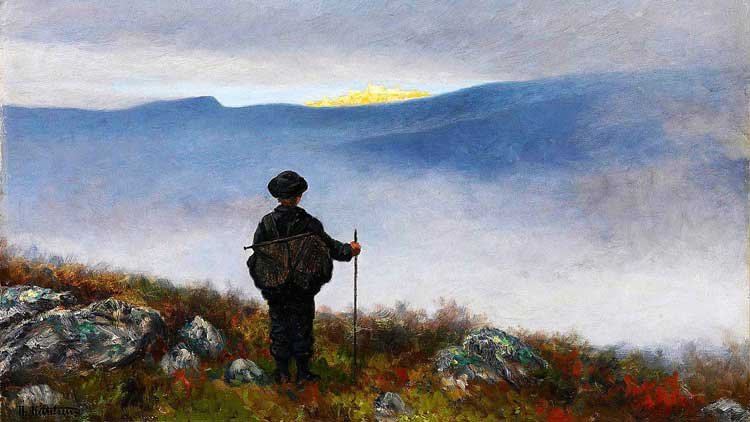
The question of whether the soul survives death is far older than modern religious debates.
In Plato’s Phaedo, Socrates faces death while discussing the soul, philosophy, purification, knowledge, and immortality. The dialogue presents several arguments for the soul’s survival while also exposing the difficulty of proving what lies beyond bodily life.
A useful overview of Plato’s arguments concerning the soul in the Phaedo shows that ancient philosophy did not treat death merely as biological termination. It treated death as a test of what a human being truly is.
SoulCredo does not need to accept every Platonic argument.
The importance of Plato lies in the seriousness of the question.
For more than two thousand years, thoughtful people have recognized that the fate of consciousness depends upon the nature of the soul.
The modern dismissal of the soul does not make the question disappear.
It only removes one possible vocabulary for discussing it.
SoulCredo restores that vocabulary while developing its own interpretation.
The soul is the inner domain in which Spirit, Ego, consciousness, personality, pain, longing, memory, and Will To Become interact.
Death therefore raises more than the question of whether a body remains alive.
It asks what happens to this inner domain when the bodily vessel can no longer sustain its worldly expression.
The Soul May Know More Than the Ego
Ego seeks a stable identity.
It wants to know who it is, what it owns, how others see it, and how its story will continue.
Death threatens Ego because death removes the structures through which Ego recognizes itself:
- name
- face
- body
- property
- status
- history
- social role
- future plans
- relationships of recognition
The Ego therefore reacts to death in two common ways.
It invents a perfect continuation of itself.
Or it declares that nothing continues.
Both answers remain Ego-centred.
In the first, Ego receives immortality.
In the second, Ego takes the entire soul into nonexistence with it.
SoulCredo separates Ego from Spirit.
The dissolution of Ego does not necessarily imply the extinction of Spirit.
The personality may be temporary while the Spark belongs to a deeper order of life.
This does not tell us exactly what happens after death.
It changes the question.
Instead of asking only, “Will my present personality continue forever?” we may ask:
- What within me belongs to Spirit rather than Ego?
- What part of this life is temporary?
- What has been developed through my becoming?
- What has the SoulGuardian protected, strengthened, or neglected?
- What can Spirit carry beyond the present vessel?
- What must fall away?
Death may be less like moving the Ego into another room and more like a radical separation between what was temporary and what was essential.
Is Spirit Individual or Part of Something Greater?
SoulCredo speaks of the Spark within the individual.
A spark is distinct enough to be seen, yet it comes from fire.
This image creates another question.
Is Spirit individually created and permanently separate?
Or is each Spirit an expression of a greater divine life?
Perhaps both descriptions contain part of the truth.
The individual Spark may carry a unique history, form, perspective, and developmental path while remaining part of a greater spiritual reality.
A wave belongs to the sea but still takes a particular form.
A branch belongs to the tree but grows in a particular direction.
A cell belongs to the body but performs a particular task.
These are metaphors, not proofs. Their purpose is to help us think beyond the crude choice between an isolated immortal Ego and absolute nothingness.
Consciousness after death may involve continuity and transformation together.
The individual may remain meaningful without remaining completely separate.
Spirit may return without becoming nothing.
Identity may be preserved at one level and surrendered at another.
The Will To Become may continue beyond the conditions that shaped it during earthly life.
SoulCredo does not need to close these possibilities too early.
It needs to develop them.
What Would the Will To Become Mean After Death?
Will To Become explains the pressure of Spirit within life.
Spirit does not merely seek passive continuation.
It seeks development.
This raises a major question for SoulCredo:
Does becoming end with bodily death?
If Spirit survives but can no longer grow, learn, relate, contribute, or transform, survival may become a form of eternal stagnation.
That would contradict the inner nature of Spirit as SoulCredo understands it.
A meaningful afterlife would therefore need to contain some continuation of becoming.
Perhaps consciousness expands.
Perhaps the person confronts the truth of the life they lived.
Perhaps Spirit is drawn toward greater integration.
Perhaps neglected development becomes visible.
Perhaps the SoulGuardian’s stewardship has consequences.
Perhaps individual experience contributes to a greater spiritual intelligence.
Perhaps becoming continues in forms that earthly personality cannot imagine.
This is theological and metaphysical development, not scientific reporting.
A developing spiritual philosophy must explore the consequences of its principles.
If Spirit’s nature is Will To Become, any SoulCredo account of consciousness after death should preserve development rather than reduce the afterlife to static reward, static punishment, or endless personality repetition.
Spirit must continue becoming, or Spirit ceases to be what SoulCredo understands it to be.
Death and the Responsibility of the SoulGuardian
The SoulGuardian is the conscious steward of Spirit within the soul.
This role gives death immediate relevance.
A person does not need a complete map of the afterlife to understand that the present life matters.
The SoulGuardian is responsible for the vessel now.
The body must be cared for.
The mind must be developed.
The Ego must be understood and prevented from imprisoning the soul.
Talents must be discovered.
Relationships must be built.
Value must be created.
Health, prosperity, love, contribution, dignity, and purpose must be pursued in forms that serve life.
The Inner Cry must be heard.
The Will To Become must receive direction.
SoulCredo’s self-discovery questions reflect this responsibility. Self-discovery is not merely an exercise in describing one’s personality. It is part of learning what kind of vessel one possesses, what Spirit demands from it, and how the SoulGuardian must guide its development.
If consciousness continues after death, the quality of our stewardship may shape what continues.
If personal consciousness does not continue in the form we recognize, this life still represented our opportunity to serve Spirit through this particular vessel.
Under either possibility, neglect remains tragic.
Belief in an afterlife should not make earthly life disposable.
Uncertainty about an afterlife should not make earthly life meaningless.
Both should increase responsibility.
The Inner Cry May Reveal That We Belong to More
Human beings often feel that ordinary survival is insufficient.
They want meaning.
They want their life to matter beyond consumption and reproduction.
They want love that death cannot make meaningless.
They want contribution that outlasts their body.
They want to understand why consciousness appeared and why it carries such powerful demands.
A psychological interpretation may explain these desires through fear, attachment, instinct, social formation, or the desire for symbolic continuity.
SoulCredo sees something more.
The Inner Cry may reveal that Spirit does not experience itself as a temporary accident.
It reaches beyond the immediate form.
It demands becoming that a single lifetime may not complete.
It fears more than death.
It fears waste.
It fears failure to become.
It fears the loss of unrealized meaning.
This does not prove consciousness after death.
An inner feeling does not automatically establish an external reality.
But the Inner Cry belongs inside the investigation.
A spiritual philosophy cannot discard the deepest recurring experience of the soul merely because it does not arrive as measurable data.
The soul’s longing may mislead us.
It may also orient us.
The purpose of spiritual development is to learn the difference.
The Question of Death Is Also the Question of Happiness
Death intensifies the question of happiness.
What kind of happiness matters if everything ends?
What kind of happiness matters if something continues?
Pleasure alone is insufficient in either case.
If life ends completely, pleasure cannot rescue a wasted existence from meaninglessness.
If Spirit continues, pleasure alone cannot prepare it for further becoming.
SoulCredo defines happiness more deeply.
Meaningful happiness involves inner peace, purpose, health, love, belonging, prosperity, accomplishment, contribution, self-command, and proper stewardship of Spirit.
This happiness does not deny death.
It creates a life capable of facing death without discovering that the soul was never truly lived.
A person may fear death because they love life.
They may also fear death because they have not yet entered their own life.
They postponed becoming.
They served Ego while Spirit remained unheard.
They built social identity while neglecting the soul.
They accumulated distractions while the Inner Cry became more painful.
Death then appears not only as extinction but as interruption.
The unfinished Spirit confronts the end of its vessel.
Awareness of the transience of life can expose whether we are genuinely becoming or merely soothing the restless soul with temporary satisfactions.
The question of consciousness after death should therefore return us to consciousness before death.
Are we awake now?
The Fear of Nothing and the Fear of Something
Many people fear that nothing exists after death.
Others may secretly fear that something does.
Nothing removes future suffering, but it also removes identity, love, memory, possibility, and meaning.
Something preserves possibility, but it may also preserve responsibility.
If consciousness continues, perhaps death does not release us from the life we created.
Perhaps truth becomes harder to avoid.
Perhaps Ego’s explanations fall away.
Perhaps we encounter the consequences of how we treated Spirit, other people, and the vessel entrusted to us.
Perhaps the afterlife is feared because some part of the soul suspects that becoming carries obligations beyond social appearance.
This principle appears in many spiritual traditions through judgment, karma, purification, rebirth, or spiritual consequence.
SoulCredo can develop the principle without mechanically adopting one established doctrine.
The SoulGuardian’s actions matter because they shape Spirit’s development.
A life of deliberate cruelty, waste, cowardice, exploitation, or spiritual neglect cannot be assumed to have the same inner consequence as a life of courage, service, development, love, and responsible becoming.
This is not necessarily a claim about a cosmic courtroom.
It is a claim about formation.
We become through what we repeatedly do.
If consciousness continues, it may continue as the consciousness we helped form.
“Yes, But” Is the Proper Spiritual Position
SoulCredo begins with yes.
Yes, existence appeared.
Yes, consciousness exists.
Yes, Spirit lives within the soul.
Yes, the Inner Cry reveals a demand beyond passive survival.
Yes, the Will To Become drives life toward development.
Yes, the individual is more than social identity and Ego.
Yes, consciousness after death is a meaningful spiritual reality.
But SoulCredo does not stop at a historical yes.
It asks:
Yes, but what is Spirit?
Yes, but what part of the person continues?
Yes, but what becomes of memory?
Yes, but what happens to Ego?
Yes, but does the SoulGuardian continue as an individual centre of responsibility?
Yes, but does the Spark return to a greater divine life?
Yes, but can becoming continue without the body?
Yes, but what does death reveal about how we should live?
The “but” protects SoulCredo from becoming rigid doctrine.
It keeps belief alive.
It allows theology, esotericism, philosophy, depth psychology, spiritual tradition, and personal experience to contribute without surrendering SoulCredo’s identity to any one of them.
“Yes, but” is not weak belief.
It is belief with a living mind.
Why We Should Refuse the Worship of Zero
Zero has value.
It represents absence, ending, negation, and the removal of falsehood.
But zero should not become a god.
Modern people sometimes worship nothingness while imagining they have escaped religion.
They place absolute faith in extinction.
They treat meaning as temporary chemistry.
They describe Spirit as illusion.
They convert death into final erasure.
Then they call this certainty rational.
SoulCredo refuses that worship.
The first reality was not zero.
The first reality available to consciousness is one.
I exist.
Something is happening.
Life is present.
Spirit demands development.
The universe has produced a being capable of asking whether being can survive its present form.
Perhaps the answer will eventually require a no to many inherited beliefs.
Perhaps heaven is not what people imagined.
Perhaps personality does not continue unchanged.
Perhaps Ego disappears.
Perhaps memory transforms.
Perhaps some forms of individual identity fall away.
Let the zeros fall where they must.
But do not cut down the entire tree before we understand what is growing.
Consciousness After Death as a SoulCredo Doctrine in Development
SoulCredo should not pretend that its account of consciousness after death is complete.
This article establishes a foundation rather than a finished theology.
That foundation contains several principles.
First, existence has priority over nothingness because existence is the reality already given to us.
Second, Spirit is the living force within the soul and cannot be reduced automatically to the temporary social personality.
Third, the body is a vital vessel of Spirit, but the destruction of the vessel does not by itself settle the ultimate fate of Spirit.
Fourth, personal identity after death is a genuine problem. The continuation of Spirit does not automatically prove the continuation of Ego, memory, personality, or individual consciousness in their current forms.
Fifth, Will To Become suggests that any meaningful survival of Spirit must contain development, transformation, or movement toward fuller being.
Sixth, the SoulGuardian’s stewardship matters because earthly life forms the consciousness through which Spirit presently acts.
Seventh, SoulCredo rejects both blind religious affirmation and blind materialist negation.
Eighth, synthetic knowledge grows through yes, but: affirmation followed by investigation, interpretation, pruning, and further development.
From these principles, a fuller SoulCredo understanding of death can grow.
This is how a belief system becomes a school of thought.
It does not merely repeat answers.
It develops consequences.
What Happens When We Die?
SoulCredo’s present answer is this:
The physical vessel ceases to function.
The individual can no longer participate in earthly life through the same body.
The familiar relationship between personality, memory, Ego, and bodily consciousness is broken.
But SoulCredo does not accept that this physical ending proves the reduction of Spirit to nothing.
Spirit belongs to the deeper fact of existence.
The Spark carries the Will To Become.
What continues may not be the personality exactly as we know it.
What continues may involve transformation, separation from Ego, return to a greater spiritual reality, preservation of essential identity, or another form of becoming that earthly consciousness cannot yet describe.
These possibilities require further development within SoulCredo.
The answer is therefore not an empty, unexamined yes.
It is not an automatic no.
It is:
Yes, conscious existence continues—but we must still understand what consciousness becomes after the vessel dies.
That statement is a SoulCredo belief.
It is spiritual and metaphysical.
It is not presented as a scientific finding.
Its authority comes from the SoulCredo understanding of existence, Spirit, the Spark, Will To Become, the vessel, and the responsibility of the SoulGuardian.
Nothing Cannot Have the Final Word
Nothing cannot speak.
Nothing cannot investigate.
Nothing cannot remember.
Nothing cannot deny.
Only existence can produce the sentence, “Nothing exists after death.”
That sentence is spoken by one.
A living consciousness.
A present Spirit.
A being formed from the first affirmation of existence and standing on one branch of an immense tree of becoming.
Perhaps death removes that branch.
Perhaps the leaves fall.
Perhaps the form returns to the earth.
But we have not thereby proved that the life moving through the tree has become zero.
SoulCredo continues the investigation from the side of existence.
Not because every spiritual story must be true.
Not because fear demands a comforting answer.
Not because ancient beliefs should be repeated without development.
We begin with one because one is already here.
We begin with Spirit because Spirit is the inner life SoulCredo seeks to understand and serve.
We begin with yes because no cannot be granted victory before inquiry has begun.
Then we add the word that keeps belief alive:
But.
Yes, there is consciousness after death.
But what continues?
Yes, Spirit survives the present vessel.
But what becomes of the individual?
Yes, existence is greater than the form we currently inhabit.
But what responsibilities follow from that truth?
Those questions are not weaknesses in the SoulCredo belief system.
They are new branches.
From them, the tree of knowledge continues to grow.